
Winter and dog paw pad injury

Table of Contents
- Why are pets’ paw pads so sensitive to the cold?
- What are the effects of de-icing salt on pets’ paws?
- How to prevent paw pad injuries in winter?
- How to tell if your pet has paw pad injuries?
- Why choose a pet-friendly ice melter and how to use it to minimize the risks?
- How to use our Pet Friendly Ice Melter for maximum effectiveness and minimum risk?
- Why choosing the right ice melter is important
Winter can be tough on pets’ paw pads. Exposed to cold, snow, ice and de-icing salt, dogs’ and cats’ paws are at risk of irritation, cracking and painful injuries. To help reduce these risks, it is important to understand why paw pads are sensitive and how a pet-friendly ice melter can make a real difference.
These winter pet safety tips will help you protect your companions’ paws while enjoying safer surfaces for the whole family.
Why are pets’ paw pads so sensitive to the cold?
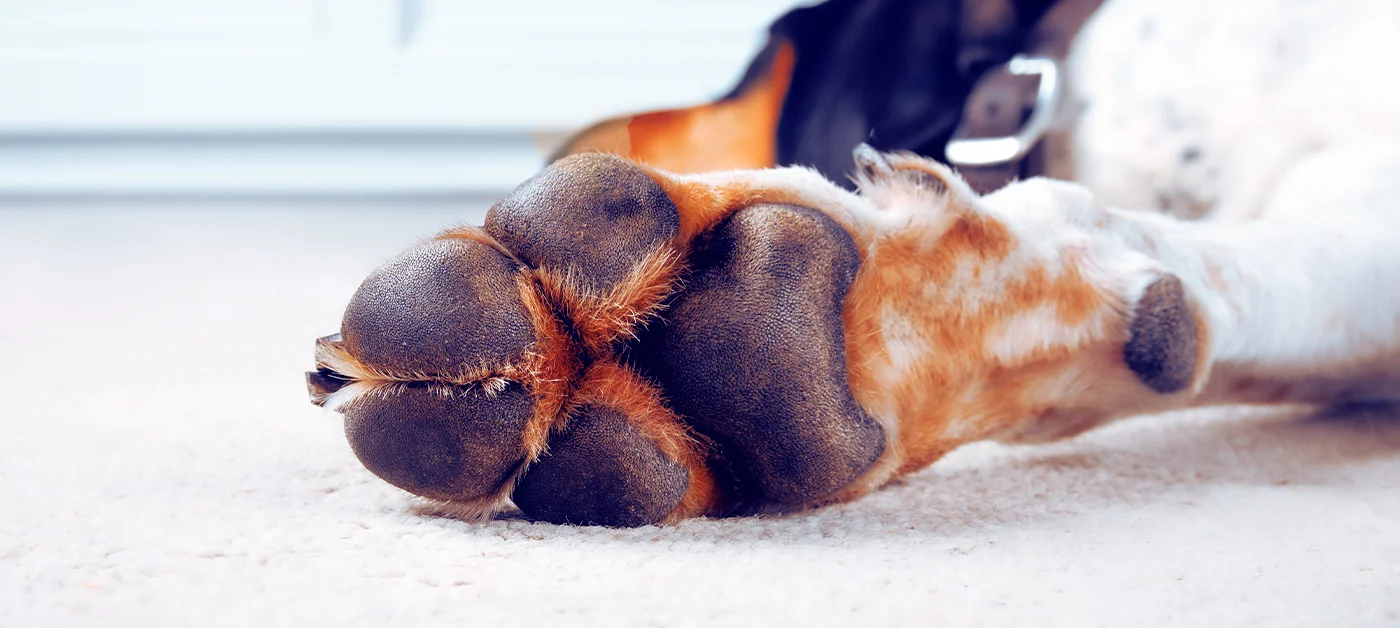
Paw pads act as natural shock absorbers for our companions. They help absorb some of the impact when an animal walks, runs or jumps, reducing the stress placed on the rest of the body. This helps protect the bones and joints. But that’s not all. Paw pads also provide better traction to prevent your pet from slipping and offer greater stability on a wide variety of surfaces.
It’s no wonder, then, that your companions’ paws are affected by winter weather and everything that comes with it. Every time they go outside during the cold season, their paw pads must contend with cold temperatures, ice and de-icing salt. Since they can quickly become more sensitive, they require extra care.
Regardless of your pet’s breed or size, its paw pads remain vulnerable to winter conditions. When they become dry or irritated, tiny cracks can form, creating entry points for salt, dirt and moisture and increasing discomfort. Several factors take a toll on paw pads during the cold season:
- extreme cold slows circulation in the extremities, making paw pads more sensitive and fragile
- sudden temperature changes between freezing outdoor conditions and heated indoor spaces can dry out paw pads, increasing the risk of cracking
- ice and compacted snow can cause abrasions, cuts and cracks
- surfaces made rough by the application of sand or gravel help prevent falls but can be abrasive on paw pads
- some chemical ingredients used to melt snow and ice can be toxic if pets lick their paws after a walk
- harsh de-icing products can cause irritation and discomfort, especially if they seep into small cracks
What are the effects of de-icing salt on pets’ paws?
Traditional de-icing products often contain salts and chemical agents that can dry out sensitive skin and irritate paw pads. When pets walk on treated surfaces, salt can also become trapped in tiny cracks or between their paw pads, causing pain. Finally, since pets often lick their paws, especially after spending time outdoors, they may accidentally ingest harmful residues.
The dangers of de-icing salt for dogs’ and cats’ paws in winter
1. Irritation and pain
When it comes into contact with a cut, crack or very dry skin, salt can cause a burning sensation and make walking uncomfortable or even painful.
2. Dry paw pads
Prolonged exposure to cold temperatures can cause paws to lose their natural moisture. As a result, paw pads become dry, chapped and more prone to cracking.
3. Accidental ingestion
Pets often lick their paws after a walk. If their paws are covered in salt or chemical residue, these substances can be ingested.
4. Increased risk of slips
Some de-icing products, when improperly applied or poorly chosen, can leave slippery residue or a wet film that does not always provide better traction. Choosing a high-quality ice melter that is adapted to the areas frequented by pets is an essential preventive measure.
How to prevent paw pad injuries in winter?
Prevention is key to reducing paw pad injuries during the cold season. A few simple steps can make a big difference.
Before every walk
- Check your pet’s paws and paw pads for any signs of damage.
- If needed, trim the hair between the paw pads to prevent it from trapping moisture and residue.
- Apply a protective balm if the paw pads are dry or irritated (consult your veterinarian to find out which product is best for your pet).
While walking
- Limit exposure time during extreme temperatures and avoid going out during the coldest hours whenever possible.
- Avoid surfaces where large amounts of de-icing products have been applied (such as roads treated with harsh chemicals).
- Pay attention to your pet’s behaviour: if they frequently lick their paws, stop often or refuse to keep walking, head back home.
After every walk
- Remove any snow, ice and residue from your dog’s or cat’s paws.
- Rinse their paws with lukewarm water.
- Dry their paws thoroughly, especially between the toes.
- Reapply paw balm as recommended by your veterinarian.
How to tell if your pet has paw pad injuries?
If your pet seems uncomfortable after a walk, inspect their paws right away. A small crack may seem minor at first, but the injury can quickly worsen if left untreated.
Consult your veterinarian if your pet’s paws remain red, painful or cracked. Every animal reacts differently to cold weather. Some dogs are more tolerant, while others have very sensitive paw pads or a lower tolerance for salt and ice. Breed and size have little influence, but older dogs and puppies may be more sensitive.
Signs to watch for:
- limping or refusal to walk
- excessive paw licking
- red, dry or cracked paw pads
- small cuts or bleeding
- sensitivity to touch
Tip: Some dogs tolerate boots quite well. However, you’ll need to see whether your furry friend is willing to wear them!

Why choose a pet-friendly ice melter and how to use it to minimize the risks?
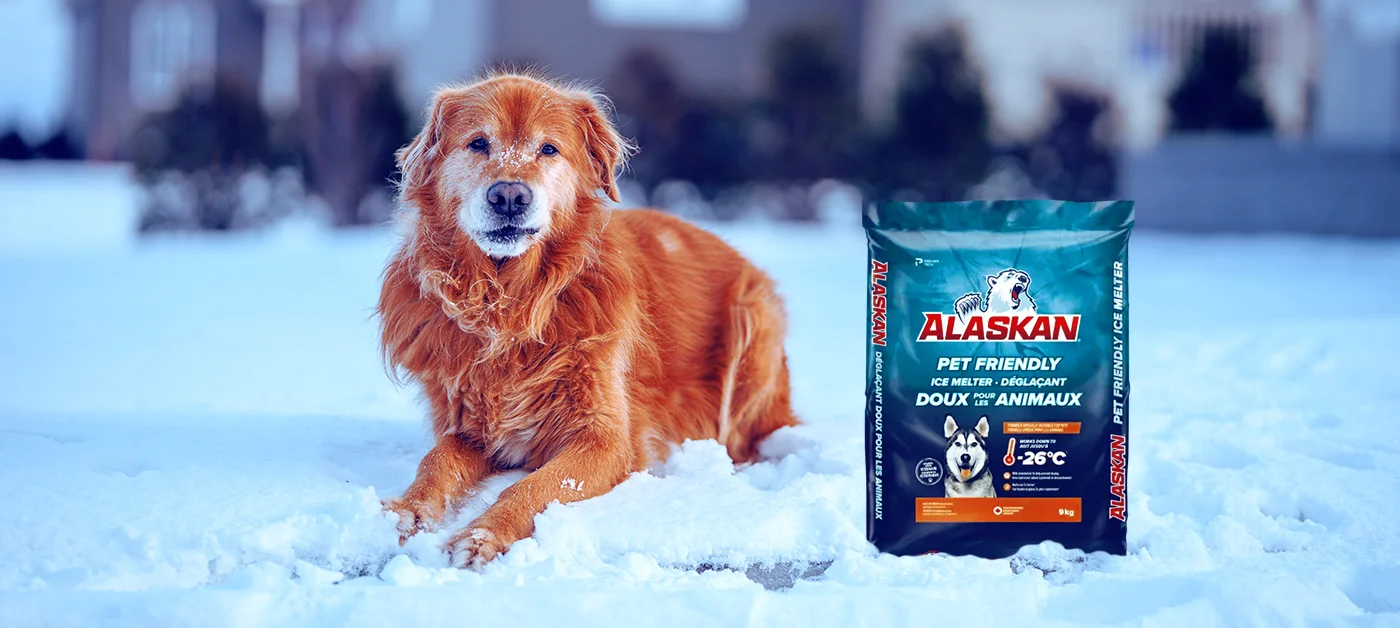
For areas where pets regularly roam, it is important to choose a product that helps make outdoor surfaces safer without exposing their paws to harsh chemicals. Alaskan Pet Friendly Ice Melter was designed with this in mind.
Unlike traditional ice melters, it is specially formulated to help minimize irritation to paw pads. Developed in collaboration with animal care professionals, Alaskan Pet Friendly Ice Melter has been tested and evaluated by veterinarians to ensure it offers a safer option for your pets.
Effective at low temperatures and designed to perform in a variety of weather conditions, it helps prevent both slips and paw injuries in your pets!
What are the benefits of Alaskan Pet Friendly Ice Melter?
- Helps minimize paw pad irritation.
- Offers a safer alternative for pet owners.
- Suitable for areas frequented by pets.
- Helps reduce the risks associated with icy surfaces, such as falls and slips.
- Easy to apply and doesn’t require large amounts.
- Delivers fast, effective results, even at low temperatures.
How to use our Pet Friendly Ice Melter for maximum effectiveness and minimum risk?
Even a gentler product must be used properly to deliver the expected results. These tips will help you keep outdoor surfaces clear and safe for both your family and your pets.
1. Apply only the amount needed
Applying more product does not necessarily improve performance. Use the recommended amount to avoid waste and unnecessary residue buildup.
2. Treat surfaces before ice forms or heavy buildup occurs
When applied before significant ice buildup occurs, Alaskan helps prevent ice from bonding to surfaces.
3. Target high-traffic areas
Focus application on entrances, steps, sidewalks and areas where pets frequently walk.
4. Sweep or remove residue as soon as possible
After the ice has melted, removing excess product can help keep surfaces cleaner and reduce contact with pets’ paws.
5. Adopt good maintenance habits
De-icer is only part of the solution, but it works best when combined with regular maintenance: shovel snow as it accumulates whenever possible, remove ice as soon as it separates from the surface, avoid excessive applications, and so on.
Why choosing the right ice melter is important
Pets’ paw pads are sensitive to the cold, de-icing salt and winter surfaces. By adopting good practices and choosing a gentler de-icer such as Alaskan Pet Friendly Ice Melter, you can help reduce the risk of injuries while keeping outdoor surfaces safer. A preventive approach helps protect the comfort and well-being of your entire family throughout the winter.