

What happens to concrete in cold weather?
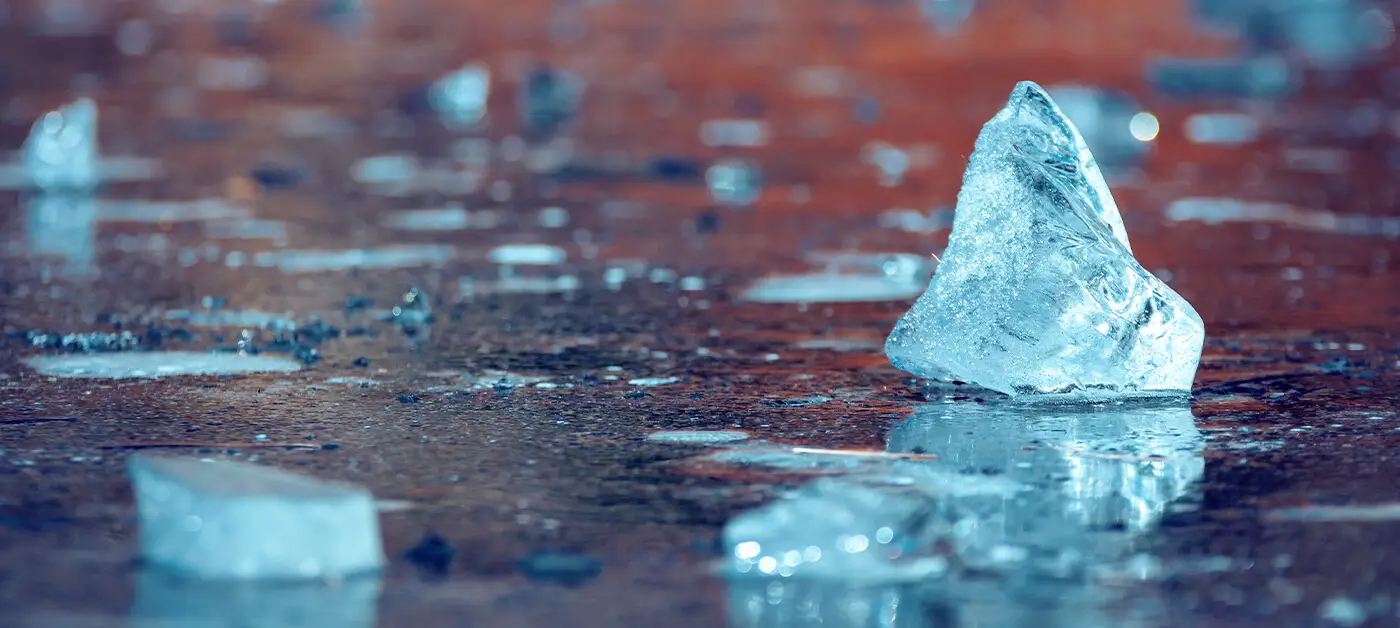
Water is the primary enemy of concrete. Even though concrete looks solid, it is somewhat porous and full of tiny capillaries that absorb and hold moisture. When water freezes, it can create internal pressure. You’ll often hear the term “freeze-thaw” cycle when experts talk about concrete in winter. Understanding what freeze-thaw is and how it can affect your concrete can help to answer the question.
Can concrete freeze during freeze-thaw cycles?
When temperatures drop below freezing, any water on the concrete will freeze. This occurs in puddles as well as in any existing cracks and/or in pores of the surface of the sidewalk. If the temperature rises above freezing, the ice will melt and then refreeze once the temperatures drop again.
So, you get freezing, then thawing, then refreezing, hence the term freeze-thaw cycle. Consider that on average, in most of Canada, we get about 60 to 80 freeze-thaw events per year. We are all familiar with leaving a liquid product in the freezer which will expand and break out of the container. As water on the pores of concrete freezes, it can cause surface spalling, scaling and widening cracks.
But that depends…
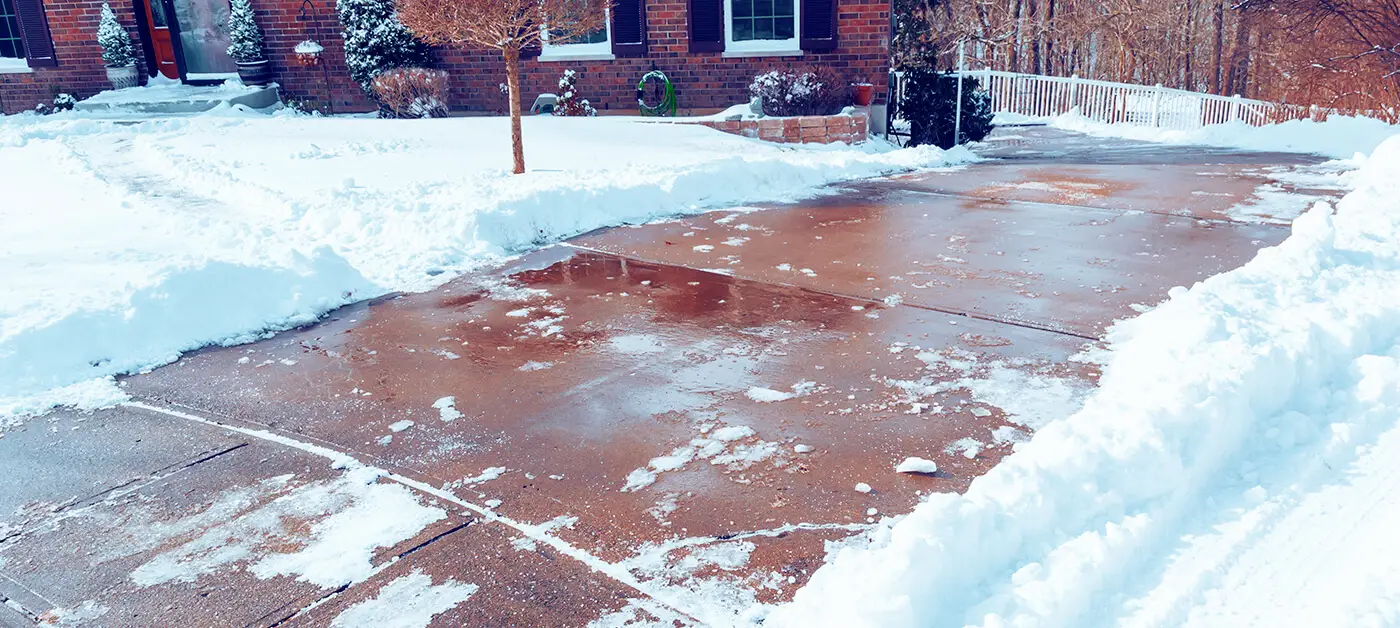
Concrete crack control
So how come municipal sidewalks can last 30-40 years without spalling?
Professionally installed concrete for municipalities is specified to be “air-entrained”. Air-entrained concrete is mixed with thousands of microscopic air bubbles that are distributed throughout the mix. What these bubbles do is give water somewhere to expand to when it freezes, relieving the internal pressure that would otherwise “pop” the concrete.
Without air entrainment, a concrete driveway is almost guaranteed to “spall”—a process where the top layer flakes off, leaving an ugly, pitted surface. Any new concrete work that you do must specify air-entrained. Most concrete contractors nowadays use this type of concrete, but some older concrete surfaces may not have air-entrained material.
What about interlocking concrete pavers?
If your property has interlocking pavers for sidewalks and the driveway, chances are you should not have any problems. The concrete process for these pavers is one that is factory-manufactured, using intense hydraulic pressure and vibration, making them incredibly dense with virtually zero internal air pockets or voids. This extreme density prevents water from absorbing into the block in the first place. Also, the way pavers are installed, water will sift through the joints.
In that case, what causes concrete damage? What are the options?
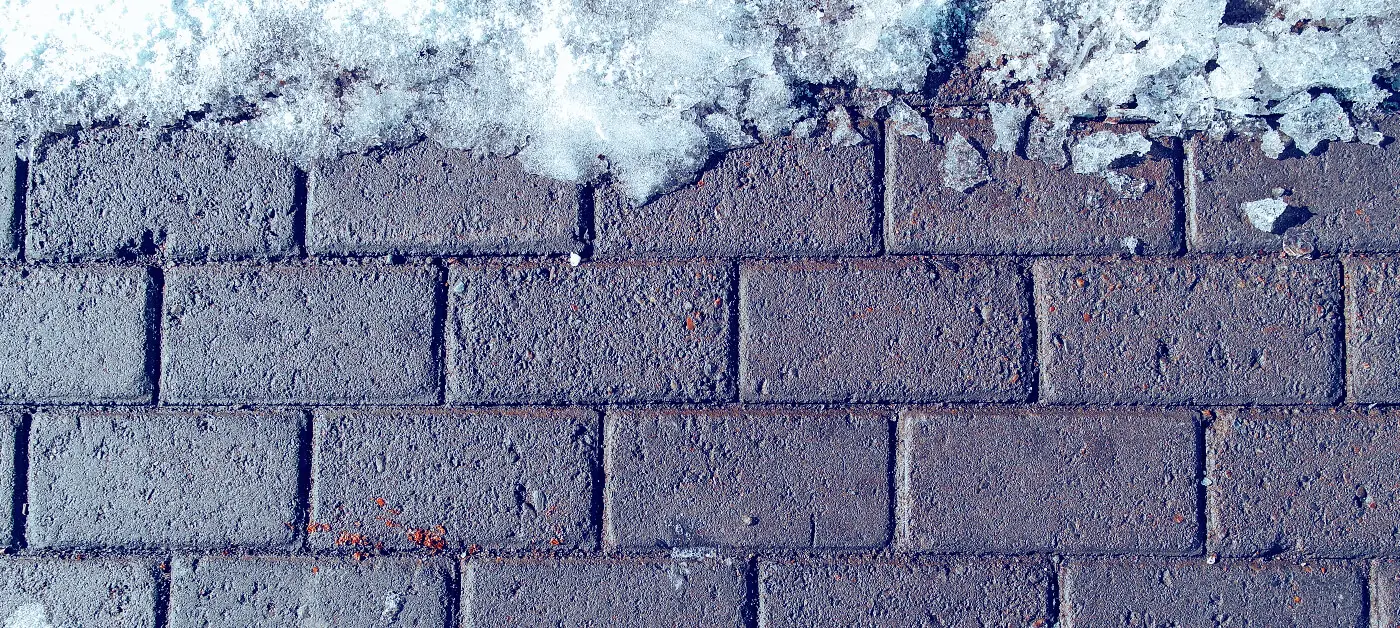
Use concrete sealer for cold weather
You bought a home with no air-entrained concrete already installed? Seal it. Even if you have good concrete, it is recommended that you spray or paint a deep penetrating silane or siloxane-based sealer on the surface every 3-5 years. Unlike film-forming acrylic sealers that sit on top, penetrating sealers soak into the pores and repel water.
They line the inner pore walls to block liquid water, de-icing salts and chlorides while allowing trapped internal moisture and vapour to escape. Otherwise, you can use lower-cost acrylic concrete sealers which will coat the surface but still allow moisture to escape, thus reducing the risk of damage. Acrylic sealers will need annual reapplications.
Think again before mixing your own concrete mix
While this is a way to save money, any home-mixed concrete destined for flat surfaces will not be air-entrained and will most probably spall.
Address poor drainage that leaves puddles
Standing water on your concrete is a major issue in winter. Let alone the increased potential for slips and falls from ice patches, the freeze-thaw cycle will lead to more cracks and surface deterioration on the concrete. Redirect downspouts away from sidewalks. If possible, correct low spots that encourage puddling.
Repair gaps and cracks that allow water to seep in and expand
Try caulking cracks and joints in your concrete slab to prevent water from entering and expanding inside the cracks.
Clear the snow as soon as possible
Although not what you want to hear, shovelling keeps concrete surfaces clear of snow and leaves less moisture for your concrete to absorb. Also, accumulated snow can compact and harden to a slippery surface. Learn how to use Alaskan before, after and during a snowfall, for easy clearing of snow and ice from stairs, entryways and parking areas.
Reduce your use of de-icing salt
After a snow event, shovel the snow off and apply Alaskan Premium Ice Melter evenly on the surface. Most people just use too much ice melter. You don’t need much for it to be effective. Read the application rate on the container: putting down more does not equate to a better or faster effect.
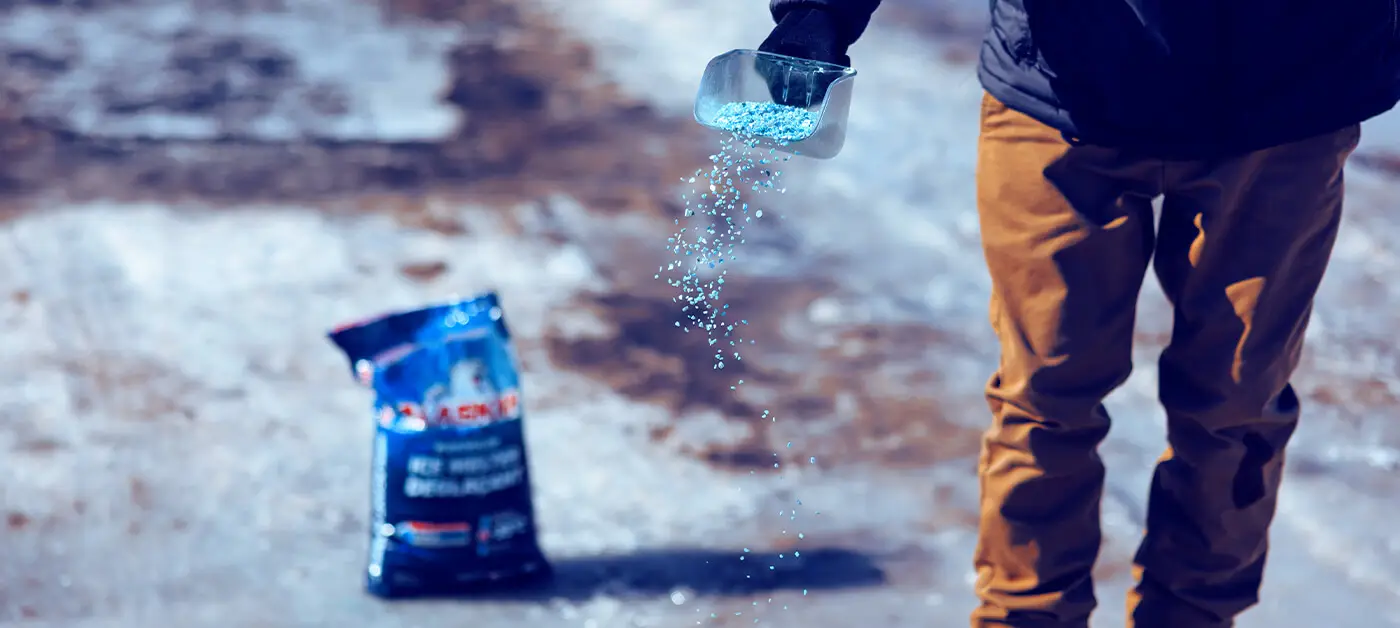
Concrete and cold weather: how to avoid damage
Although the poor condition and inferior quality of the concrete are the primary factors that lead to its deterioration during the winter, good habits can help preserve the appearance of your walkways and stairs.
Prompt removal of slush and residual ice melter granules is recommended to minimize any damage to concrete and tracking in the house. Also focus on:
- sealing the concrete is your best defense
- caulking cracks in the concrete slab
- redirecting water and reducing puddles
- not using too much ice melter (follow the directions on the package)
- removing snow more often
Even if winter can be tough on your concrete, you can minimize winter damage with a little effort. Freeze-thaw cycles don’t have to wreck your concrete surfaces with cracks and spalling.
