
How to paint on snow

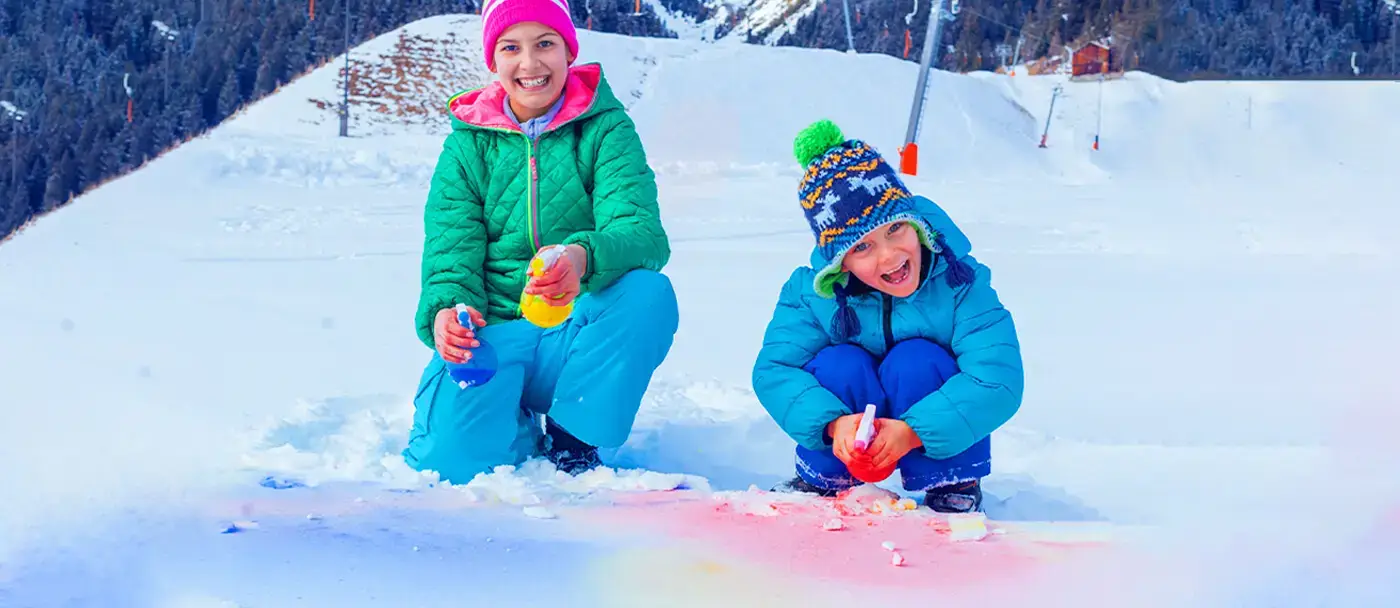
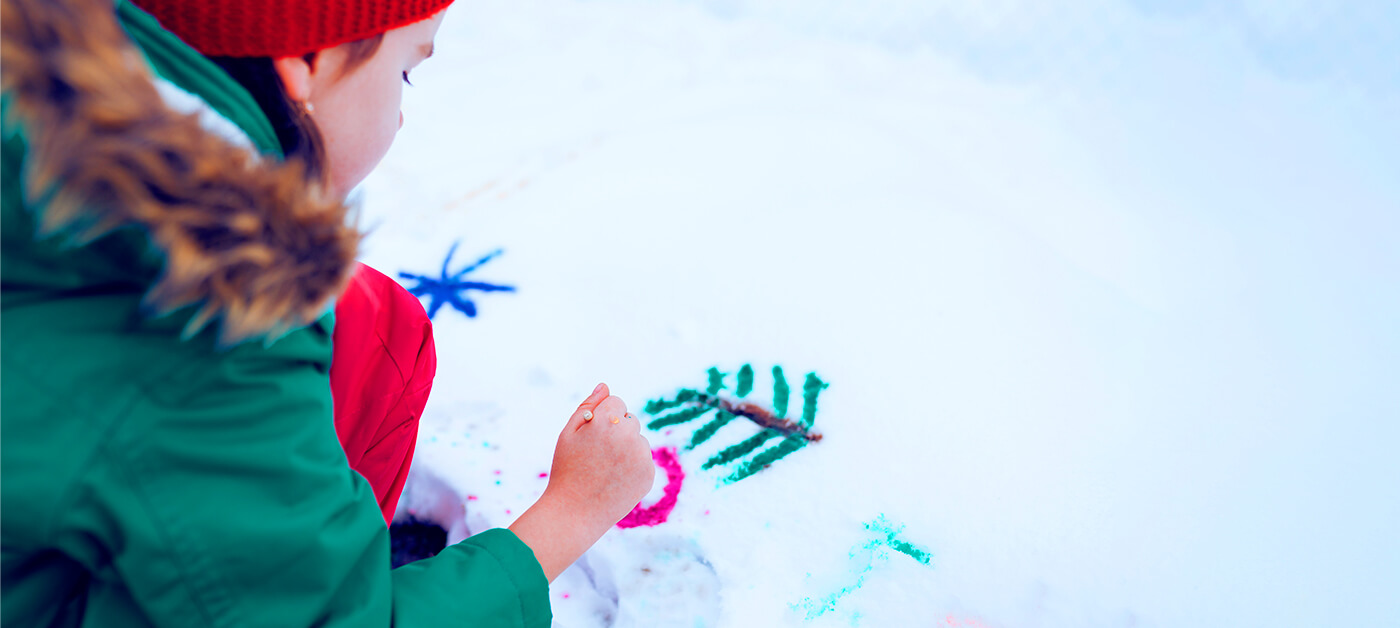
Want to add a splash of colour to your winter? Snow painting is perfect for that! You can have hours of fun painting on a giant white canvas. Even better? You can easily find everything you need for this fun and improvised activity right at home. To keep things interesting, we've also got some ideas that the whole family will love!
Ingredients required to make paint
For a change from all-white landscapes, we suggest making paint for drawing on snow (also magical on a snowman or snow sculpture!). Here are our favourite recipes for a vibrant and easy-to-apply colour, along with their advantages and disadvantages.
Recipe with food colouring and water
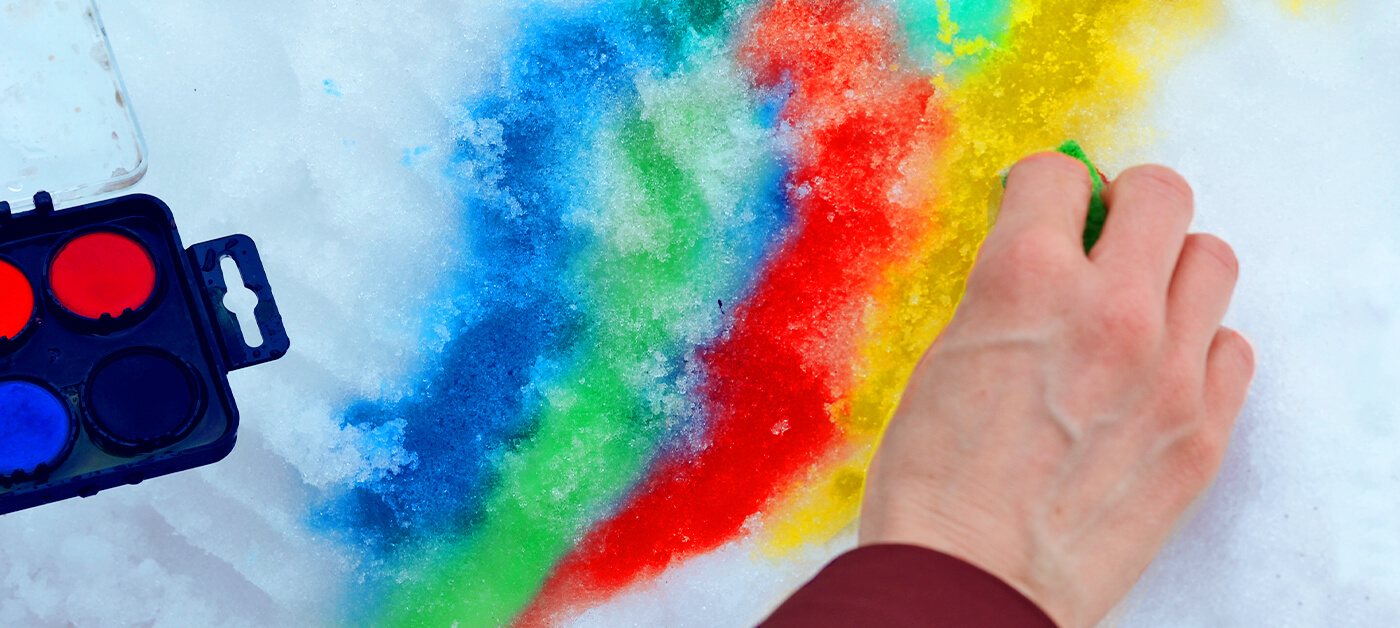
This is the most popular recipe. Easy to make, simply mix food colouring and water in a bottle. The more colouring you add, the brighter the colour will be. It's that simple. However, it's important to mention that more intense colours mean more intense stains.
You may have already experienced highly pigmented birthday cakes… even on the skin, it takes time to fade. On old dark mittens, it's not a big deal, but on a new snowsuit, it's definitely something you want to avoid.
Paint coloured with Jell-O
One of the advantages of painting with Jell-O is that it allows you to create images with a slight relief on the snow.
To make this paint, which is one of the best options, simply prepare the recipe as on the box by dissolving the powder in boiling water and then mixing it with cold water. Fill squeezable bottles (liquid dish soap bottles, sports water bottles, etc.) and place them in the snow for 30 minutes before drawing, to allow the Jell-O to begin setting.
Note that there aren't necessarily any precise proportions to follow. A good amount of powder in not too much water will result in a less runny, gelatinous consistency. You'll get more of a syrup that allows for more precise drawing.
Unlike food colouring, Jell-O powder should wash out (to be verified) and smells amazing!
How to revive your old washable Crayola-type felt-tip pens
Old felt-tip pens that no longer work aren't just for the recycling bin! Their felt tips still contain colour that you can salvage for all sorts of inventive projects, like drawing on snow.
Simply remove the felts with a pin or a pair of clips and soak them for a few minutes (for pale colours) to a few hours (for more intense colours) in the water bottles you will use outside for drawing.
Kool-Aid version
It may offer fewer colour choices, but those it does offer will be vibrant and, as an added bonus, have a delicious fruity scent. Simply pour the powder into bottles filled with water and shake to see the magic happen.
Good to know: Kool-Aid stains very easily and stubbornly, especially the red and grape colours. The intense artificial dyes in its composition can stain not only clothes, but also objects and surfaces.
Colouring the snow with bath fizzers
You can find them in stores next to children's bath products like bubble bath. To colour the water in your bottles, simply insert a coloured fizzer and let it dissolve.
If you're drawing with young children, be sure to colour your water with non-toxic substances in case they eat the snow or suck on an ice cube! Ice cubes made with Jell-O or Kool-Aid definitely taste better and are safer!
The best options for snow paint
The colours that won't stain
According to those who have tried different methods, the best non-staining options are washable markers, washable gouache or bath fizzers. If you want to take the manufacturer's word for it before trying it yourself, it's best to choose quality products from well-known brands (like Crayola washable markers, for example).
Some claim that Jell-O cleans up easily and that adding a few drops of dish soap to the colour makes cleaning easier. Since we haven't tried it, we can't confirm.
Good to know: It's also possible to buy paint in stores or online, but it's not always preferable to homemade paint. Some can be toxic if inhaled, some are volatile. And for others, it's not mentioned whether or not they stain clothes.
Which containers to choose for your snow paint
Start by checking your recycling bin! Plastic bottles with pointed nozzles (like Gatorade or liquid dish soap) offer good accuracy. Otherwise, the easiest containers to find at home are bottles with a spray nozzle, such as those for cleaning products, or even the plant sprays sold in discount stores.
However, everyone agrees that the best container is the sports water bottle used by hockey teams. Easy to handle (no need to squeeze too hard or repeatedly pull the trigger), it holds a lot of colour (so less filling is required) and also offers good accuracy. They can be found in sporting goods stores.
A few ideas to vary the activity
Make coloured ice cubes for a winter treasure hunt
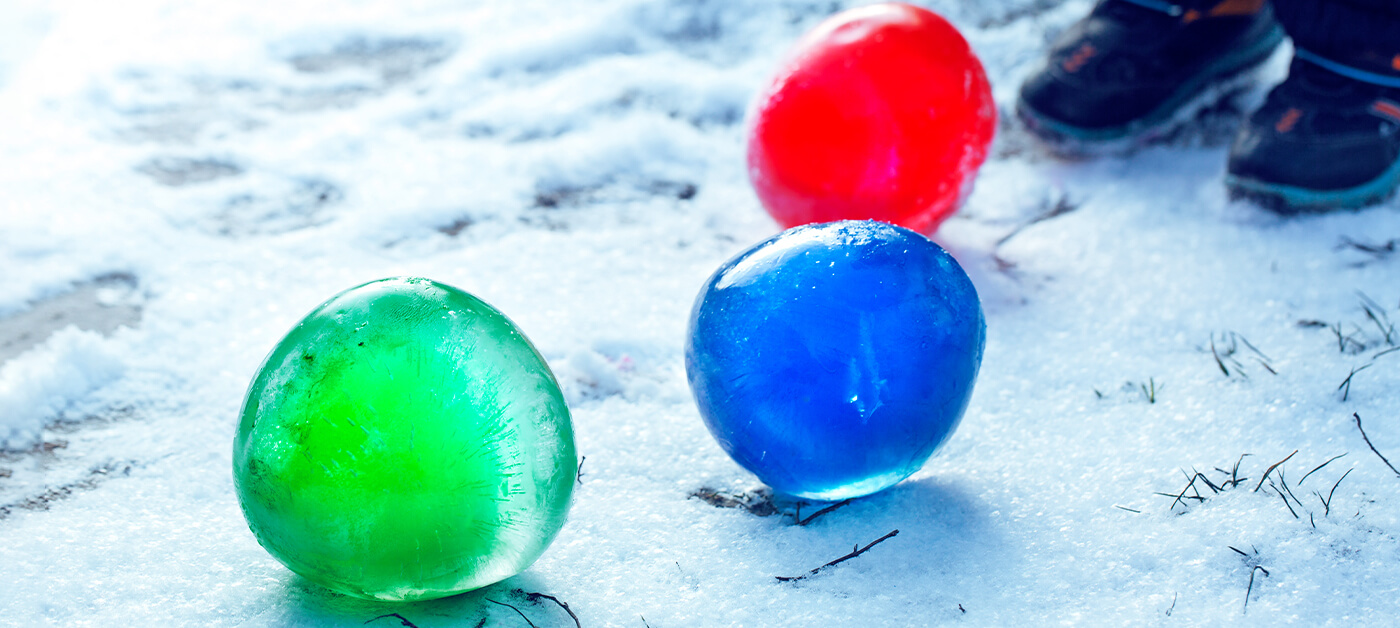
Fill plastic containers (recycled yogurt pots, for example) or molds with coloured water, then freeze them. Large coloured ice cubes can be used to decorate a fort. Small ones can be used as colourful jewels in a treasure hunt!
Painting with gouache and brushes
Older children can also use brushes and washable gouache to paint on the snow. Add colour to your forts, paint a face on your snowman, and so on. Much more accurate, this technique allows you to create real outdoor murals.
Create colourful ice lanterns
Ice lanterns are unparalleled for illuminating the garden in winter! Follow our tips to make them. If you freeze them outdoors in very cold weather, be sure not to let the water freeze completely.
Create personalized light decorations
You can also use balloons to create personalized hanging sculptures. Fill the balloons with water and add glitter or confetti. You can also insert an object inside, such as a figurine. Insert a string and tie the balloon, leaving one end of the string sticking out. Take your balloons outside to freeze.
Depending on the temperature, they may take a few days to freeze completely. Once they have, tear them open and hang your creations from the trees.
Magical activity: a search and find that's bubbly!
Before starting the activity, secretly (and generously) sprinkle baking soda in certain areas of the yard. Then fill spray bottles with coloured vinegar instead of water and declare the bubbly colour hunt officially open!
Because baking soda is white, it's not visible on snow unless it's sprayed with vinegar. When that happens, fizzing bubbles appear on the surface of the snow. Surprise and fun guaranteed!
It's also interesting to recreate the erupting volcano experiment in winter. It's much simpler than doing it indoors because you don't need to build a structure. Simply form a mound of snow, make a hole in the top and place some baking soda inside. To make your volcano erupt, simply pour coloured vinegar!
Since snow doesn't last forever, take pictures of your creations (on the same day!). The sun, rain or snow will eventually make them disappear long before spring. For other outdoor family activities, download the Alaskan Search and Find map, reusable as often as you like, snow or no snow!