

Increased Risks of Freezing Rain: Here Is Why


- What does freezing rain mean?
- What is ice?
- What is sleet?
- Does the temperature have to be below 0 °C for ice to occur?
- Does rain clear away ice?
- What are the consequences of ice?
- How can ice be cleared away quickly?
- How should you react to ice?
- In what year did the ice storm occur in Quebec?
Canadian winters used to be cold, often harsh, and summers were mild, with some very hot days. Today, with the fickle weather, El Niño and La Niña, as well as climate change, Canadian winters have become more unpredictable than ever.
Freeze-thaw cycles do not occur exclusively at the beginning and end of the season. Cold fronts and warm fronts follow one another rapidly. Air temperatures at altitude and at ground level change quickly.
From there… sometimes just one degree is enough to change everything.
What does freezing rain mean?
Freezing rain is liquid precipitation that falls as rain or drizzle, but freezes instantly upon contact with cold surfaces such as streets, sidewalks, electrical wires, vegetation or any other object found outdoors.
This phenomenon occurs when the air at high altitude is above freezing (which turns snow into rain), while the air near the ground is 0 °C or slightly below. Liquid precipitation will therefore freeze upon contact with a sufficiently cold surface.
The phenomenon is well explained here.
What is ice?
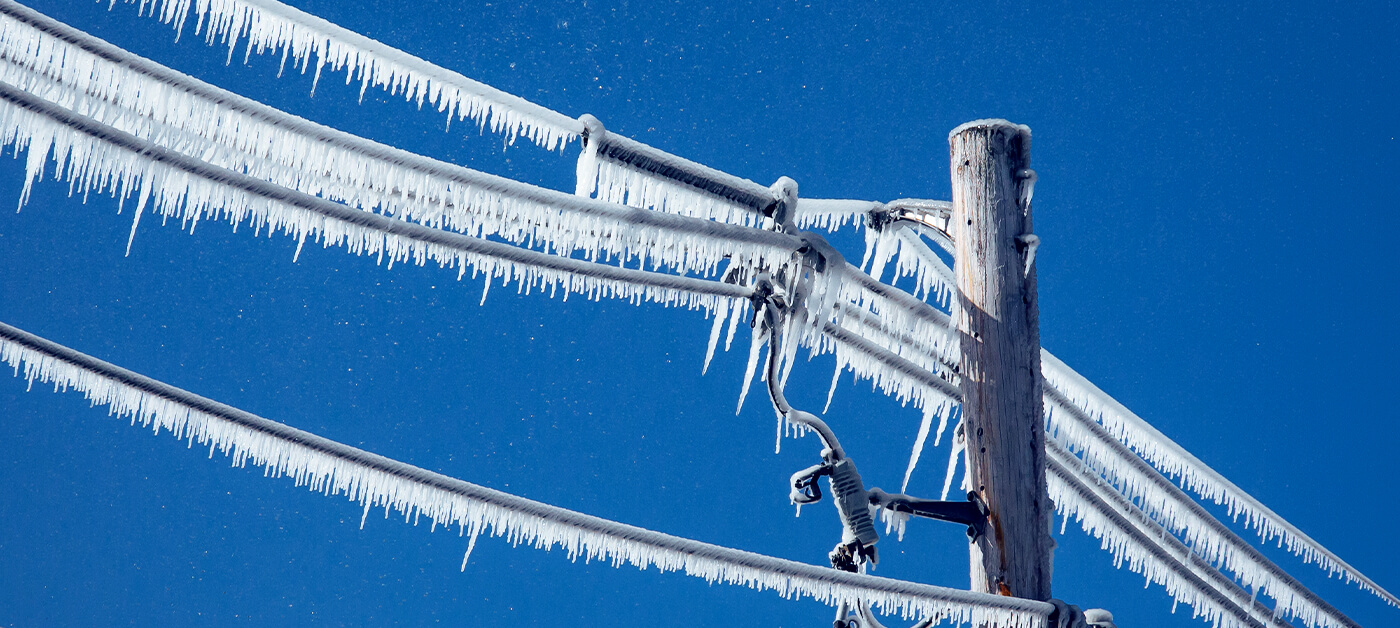
When fine drizzle or raindrops freeze upon entering a mass of cold air, a layer of ice forms on surfaces. This is called ice. This supercooling occurs on surfaces whose temperature is below 0 °C or very slightly higher.
In short, ice is the consequence of freezing rain. Ice can also form when the air is humid and the ground is cold, when the temperature is close to freezing.
How ice forms
Step 1: Fall and melting. As they fall, snowflakes enter the layer of warm air, where they melt and turn into raindrops.
Step 2: Supercooling. Raindrops pass through a layer of cold air located just above the ground. They do not freeze immediately. They are then said to be "supercooled".
Step 3: Contact and freezing. When rain comes into contact with any surface whose temperature is below freezing, it freezes instantly. This is how ice forms.
What is sleet?
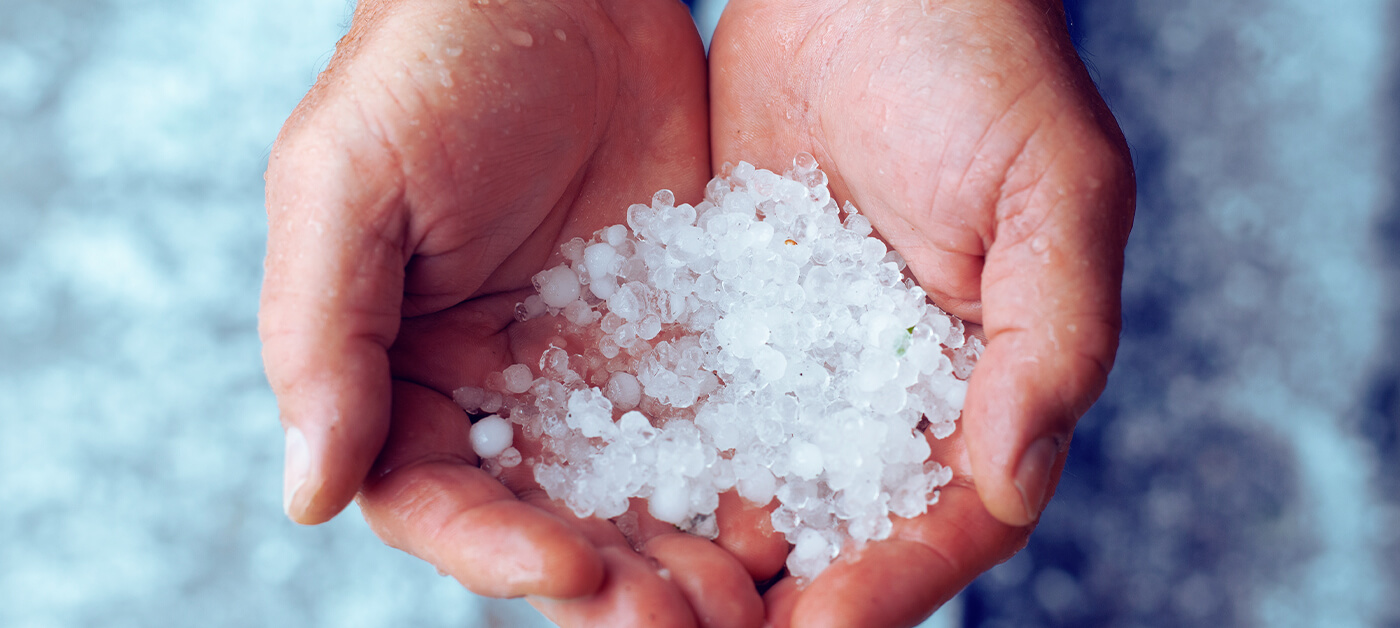
Sleet is a meteorological phenomenon that results in the precipitation of granules made up of both snow and ice crystals.
Sleet forms when the layer of cold air is thick enough for raindrops to cool. The rain then refreezes as it falls and does not reach the ground in liquid form. It turns into sleet instead of freezing only on contact.
Does the temperature have to be below 0 °C for ice to occur?
To create ice, the air temperature at ground level does not need to be below 0 °C, but the surface on which the freezing rain will land must be at 0 °C or less for it to turn into ice.
For example, if the temperature is slightly above freezing but the asphalt, sidewalks, trees or electrical wires are below 0 °C, the rain will still freeze on these colder surfaces.
In fact, just one degree in the air, ground or surface temperature can transform rain into winter precipitations. If the air temperature rises above 0 °C, it will rain. If it falls below 0 °C, it will snow. In between, there will be an unstable mixture of freezing rain or sleet.
Does rain clear away ice?
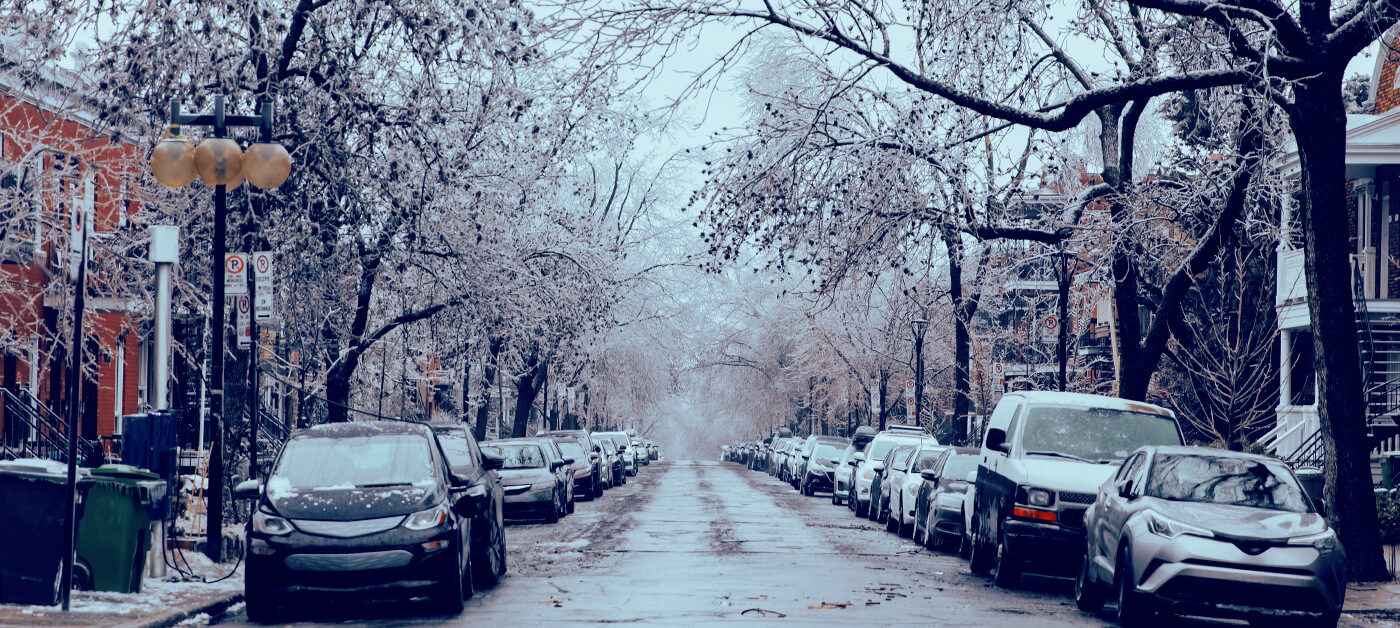
The answer is ambiguous: sometimes yes, sometimes no. It all depends on the air and road temperature, and the intensity of the rain.
Here are a few examples.
- When the temperature of the rain and the road surface is above 0 °C, the rain, especially if it is moderate to heavy, can dissolve and wash away some of the ice. Although runoff helps, patches of ice may remain in shaded, poorly drained or wind-exposed areas.
- If the rain temperature is above 0 °C but the road surface temperature is 0 °C, the rain may reduce the thickness of the ice. However, it will leave a very cold film of water on surfaces, which will quickly refreeze as soon as the temperature drops. Black ice will form at dusk or during the night.
- When the rain is below 0 °C (freezing rain), it does not wash away the ice. Rather, it freezes on contact with cold surfaces, adding further layers to the existing ice.
What are the consequences of ice?
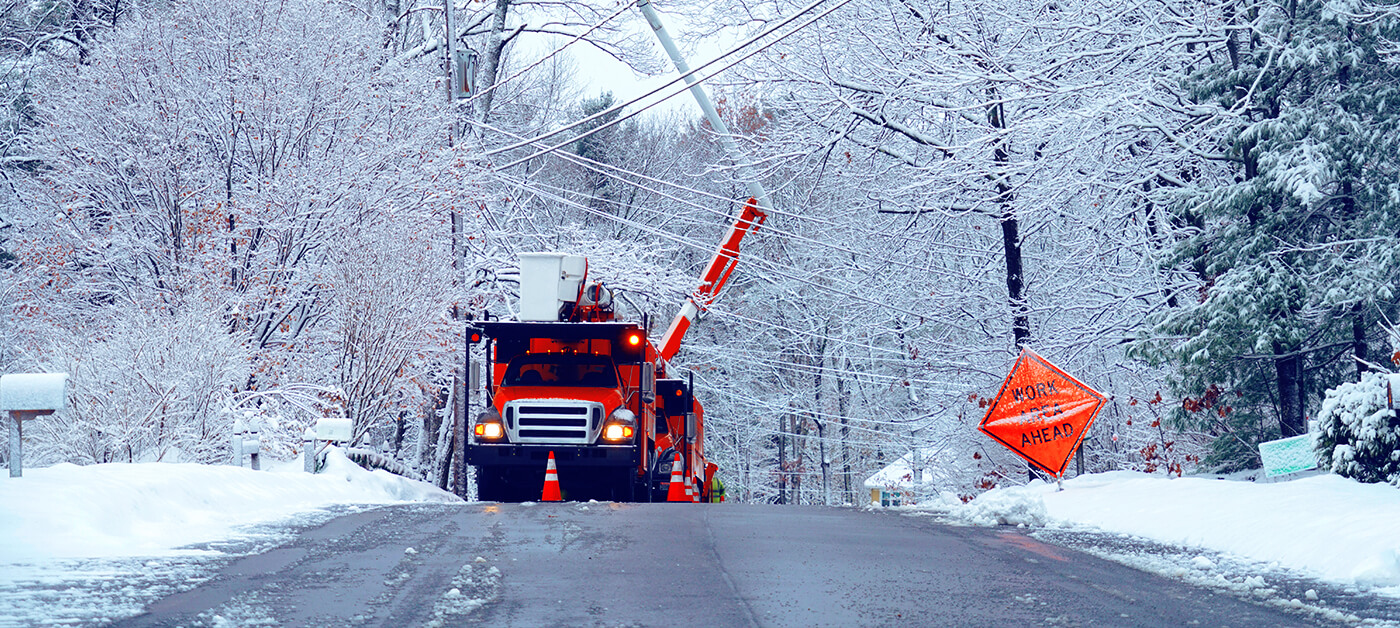
Freezing rain can have significant impacts on our daily lives. Ice buildup on tree branches, power lines, cables and equipment often leads to power outages and communication problems. Buildings can be damaged, transportation is disrupted and winter driving becomes hazardous.
Unless you absolutely must go out, it is recommended to stay home. Prevent falls by regularly maintaining your driveway, walkways and steps.
Read our article for more safety tips and to learn how to prepare for a power outage here.
How can ice be cleared away quickly?
For driveways, walkways, steps and landings, apply our Liquid Ice Melter or a thin layer of our Premium Ice Melter before a storm to prevent the ice from bonding to surfaces. This will reduce the risk of falls, prevent ice buildup and also make snow removal easier should the precipitations change.
Once the ice has melted, remove the slush to prevent it from refreezing when the temperature drops again. Reapply a de-icing product as needed, depending on the weather forecast.
To de-ice your windshield, locks, patio door, etc., use Alaskan Multi-purpose De-icer.
To better understand how de-icing products work and how to use them for optimal results, read: Explaining ice melters.
How should you react to ice?
In winter, stay informed about weather and road conditions at all times, but especially before travelling. Monitor alerts issued by Environment Canada or by your municipality.
Subscribe to Alaskan on Facebook and Instagram to receive our weather alerts.
Other websites to check for weather alerts:
Active Alerts - The Weather Network
In what year did the ice storm occur in Quebec?
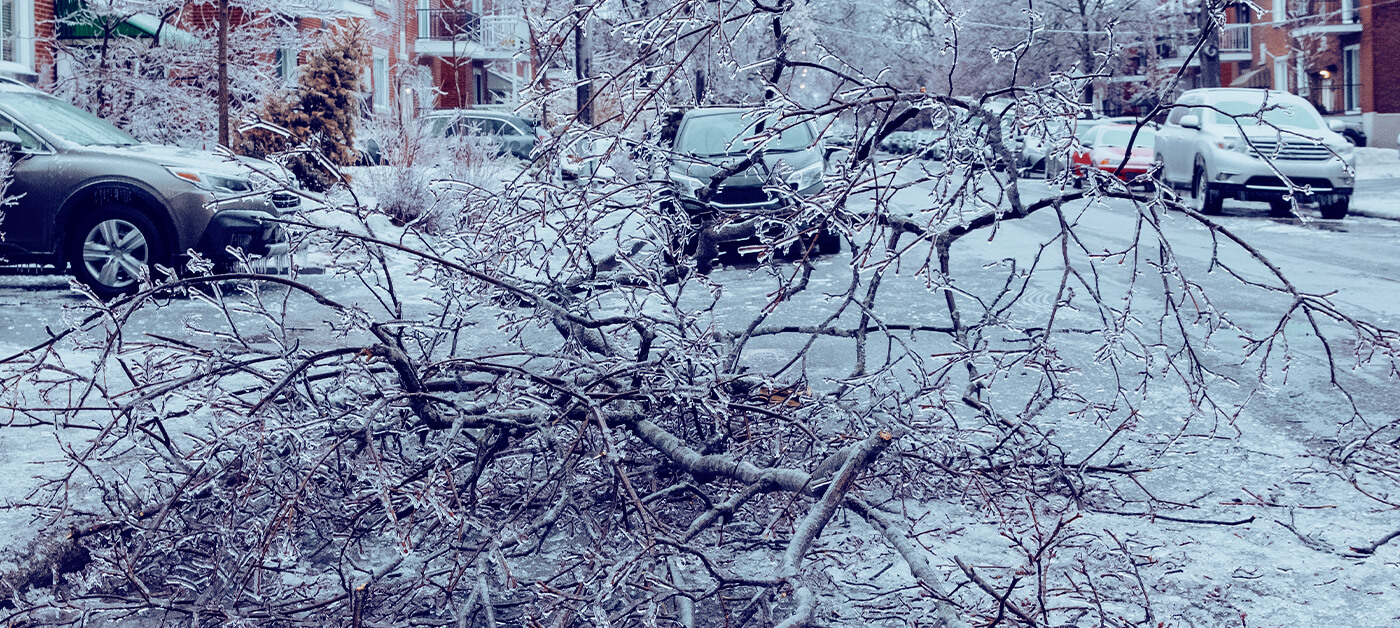
The magnitude of the ice storm that struck Quebec in January 1998 was due to the rapid succession of several major freezing rain events, covering an area of nearly 40,000 km2. It was one of the most devastating weather events the country has ever experienced.
The weather phenomenon, which paralyzed Quebec and which many described as a natural disaster, was exceptional on several levels.
- Its duration: Several episodes of freezing rain occurred from January 4 to 10, 1998.
- The extent of the affected area: The territory that was covered with a thick layer of ice extended from southwestern Quebec (Montérégie, Estrie, Greater Montreal) to eastern Ontario and the northeastern United States.
- Ice thickness: In some places, an accumulation of 50 to 100 mm (5 to 10 cm) of ice was measured on surfaces, which is a record.
What were the effects of the ice storm on the population?
Massive power outages left 1.4 to 1.6 million homes in Quebec without electricity. The disruption lasted up to four weeks, forcing many people to seek shelter in temporary government-provided facilities. There were also about ten deaths, mainly due to carbon monoxide poisoning, exposure to the cold and falls.
The economic cost, including damage to power grids, forests and agriculture, varies between 5 and 7 billion dollars depending on the source. This makes it one of the most costly natural events in Canadian history.